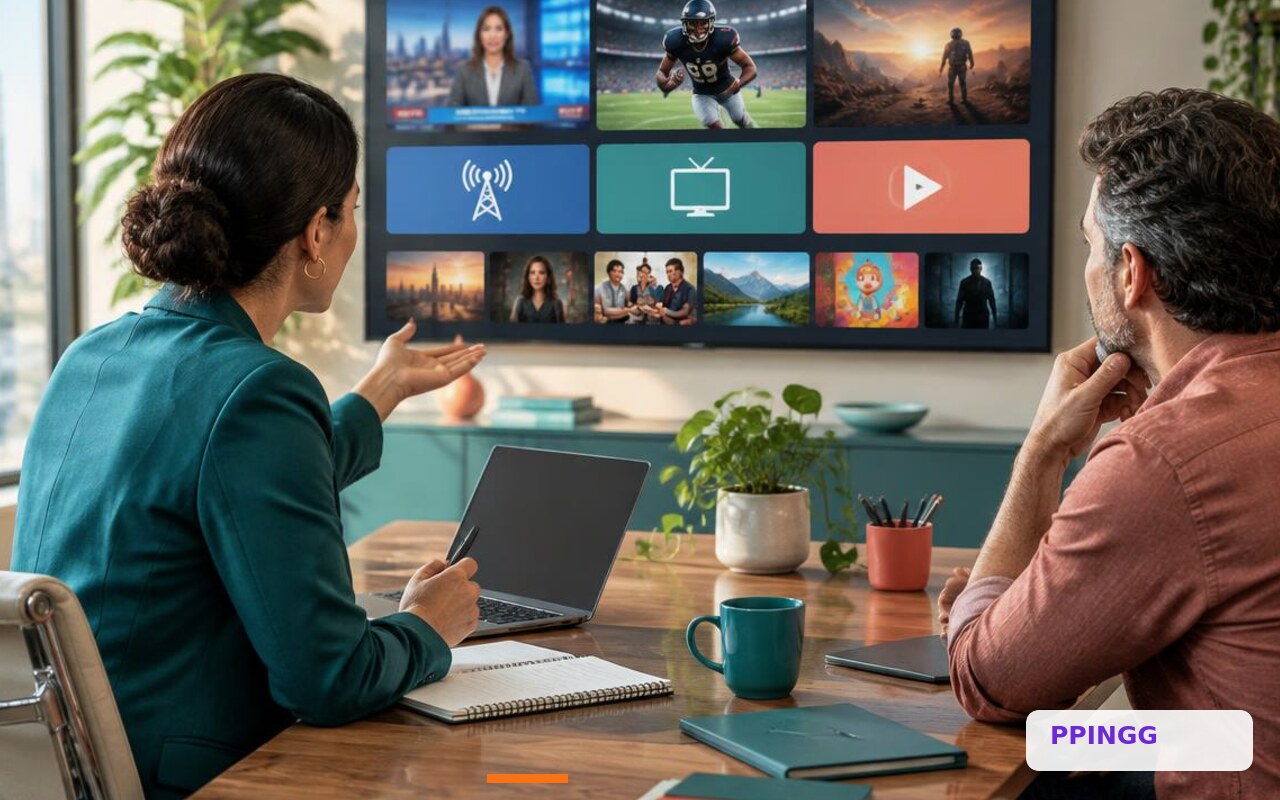
You can buy television advertising through a connected TV platform, a cable provider, a local broadcast station, an agency, or a managed service. The right route depends on whether you need precise local eligibility, broad market reach, specific programming, or hands-on support.
Do not compare quotes only by total price. Compare the screen, geography, audience, estimated reach and frequency, creative work, fees, reporting, and what happens if delivery falls short.
Key takeaways
- Buy the viewing environment and audience that fit the goal, not a list of famous channel names.
- Ask whether the quote includes production, platform, data, management, and verification costs.
- Request reach and frequency assumptions alongside impression forecasts.
- Keep ownership, approval, reporting, and underdelivery terms in writing.
The four common buying routes
| Route | How it is commonly sold | Best fit |
|---|---|---|
| CTV platform | Impressions, often through CPM pricing | Focused streaming campaigns and adjustable budgets |
| Local cable | Zones, networks, dayparts, or schedules | Local exposure around cable programming |
| Broadcast station | Spots in programs or dayparts | Broad market awareness |
| Managed partner or agency | Media plus service, sometimes creative | Businesses that want one accountable team |
What a useful proposal should show
- Campaign objective and dates.
- Eligible geography and audience definition.
- Screen and inventory breakdown.
- Budget, CPM or spot cost, fees, and estimated impressions.
- Estimated reach and frequency where available.
- Creative specifications, ownership, and approval process.
- Reporting definitions and underdelivery procedure.
How to compare two quotes fairly
Normalize the proposals to the same geography, audience, period, and creative length. A lower CPM can be poor value if the delivery includes screens or locations that do not serve the goal. A higher price may include production or management that another quote excludes.
Ask each seller to define an impression, completed view, reach, frequency, and attributed conversion. Similar labels can use different methods. Keep modeled outcomes separate from confirmed media delivery.
Before signing
Confirm cancellation rules, payment timing, creative deadlines, make-good terms, data use, brand safety, and who can change campaign settings. Request sample reporting with definitions rather than relying on a sales screenshot.
Begin with a test that is large enough to deliver but small enough to learn from. Preserve part of the budget for a creative or audience adjustment rather than committing every dollar before the first report.
Keep exploring
Ready to put your business on TV?
Enter your website to discover the audience and business details PPINGG can use to start your campaign.
Start with your websiteFrequently asked questions
Can I buy TV advertising directly?
Yes. Some stations, cable providers, and CTV platforms sell directly; managed services and agencies are alternatives when you want support.
What is an avails request?
In traditional TV buying, avails describe available spots, programs, dayparts, pricing, and audience information for a proposed schedule.
Is the lowest CPM the best deal?
No. Evaluate screen, inventory, geography, audience, frequency, transparency, creative support, and measurement with the price.
Sources and further reading
This educational article provides general information, not legal, financial, or performance advice. Advertising availability, pricing, delivery, and measurement vary.