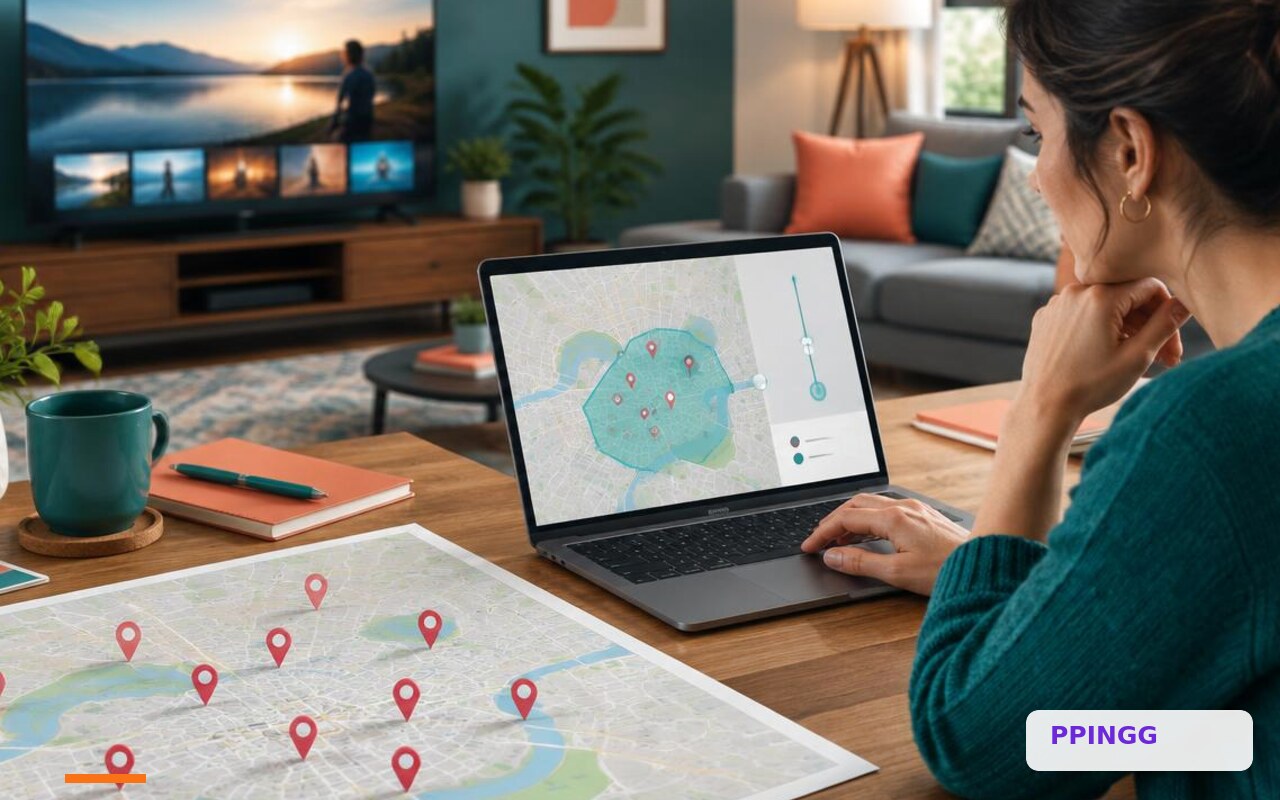
Stretching a small CTV budget means removing ineligible reach while preserving enough audience to deliver. Start with where customers can actually buy, book, visit, or receive service. Then add only the audience conditions that clearly improve relevance.
The goal is not the narrowest possible audience. An audience that is too small may underdeliver or show the same ad too often. Efficient local targeting balances relevance, scale, and frequency.
Key takeaways
- Build geography from customer and service data, not convenient map boundaries.
- Remove one unnecessary audience filter before expanding outside the service area.
- Separate locations when budgets and capacity need independent control.
- Review reach and frequency with qualified business response.
Draw the service area from reality
- Delivery zones and drive-time patterns.
- Technician or sales coverage.
- Licensing and franchise boundaries.
- Historical customer locations.
- Store trade areas and branch capacity.
- Shipping regions for online businesses.
Layer audiences carefully
Use broad household, demographic, contextual, or interest signals only when they match the offer and comply with applicable rules. Every added condition can shrink the eligible pool. Ask for a forecast after each major restriction.
If delivery is weak, remove the least important audience layer first. Expanding into locations the business cannot serve may spend the budget but does not make the campaign efficient.
Use frequency as a budget guardrail
Frequency helps a message become familiar, but excessive repetition concentrates spend on too few households. Ask whether frequency controls apply across all publishers in the plan and how often the report updates.
If frequency climbs while reach stalls, broaden a valid audience condition, extend the campaign, change inventory, or reduce daily pacing. Do not interpret more repeated impressions as more customers.
Match creative and response to the map
Local creative should make the business and area recognizable without cramming several town names into the frame. Use one offer and a landing page that confirms availability for the viewer’s location.
Categorize calls and leads by serviceability. A campaign that creates many wrong-area inquiries is not efficient, even if the response count looks high.
Keep exploring
Ready to put your business on TV?
Enter your website to discover the audience and business details PPINGG can use to start your campaign.
Start with your websiteFrequently asked questions
Should I target only one ZIP code?
Only when it represents a real service area and contains enough eligible inventory. One small ZIP code may be too restrictive.
What should I change if my campaign underdelivers?
Review audience size, geography, inventory, pacing, frequency, and dates. Relax one unnecessary restriction at a time.
How do I know whether local targeting saved money?
Compare eligible delivery and qualified response by location, not just total impressions or calls.
Sources and further reading
- IAB Tech Lab: Advanced TV standards
- IAB: Standardized Measurement Guide for CTV
- FTC: Advertising and Marketing Basics
This educational article provides general information, not legal, financial, or performance advice. Advertising availability, pricing, delivery, and measurement vary.